

PAT Testing Equipment 10 Tips For PAT Testing Equipment in Cannock
The UK Portable Appliance Testing Program (PAT), which is a compliance-based program, relies on the use, calibration, and appropriate use of testing equipment. While the capability of a technician to carry out exact safety tests is vital however, it is dependent on the quality of their test equipment and calibration as well as the correct application. Test instruments must be able to conduct electrical tests according to the IET Code of Practice for Testing and Inspection of Electrical Equipment in Service that is the industry's standard. Each instrument is crucial in verifying safety for electrical devices, regardless of whether it's a high-tech portable appliance tester, or an easy voltage indicator. Understanding the capabilities and limitations of the instrument, as well as the legal requirements for testing, is vital for those who want to make sure their testing program is safe and legally enforceable.
1. The Portable Appliance Tester (PAT Tester) Itself in Cannock
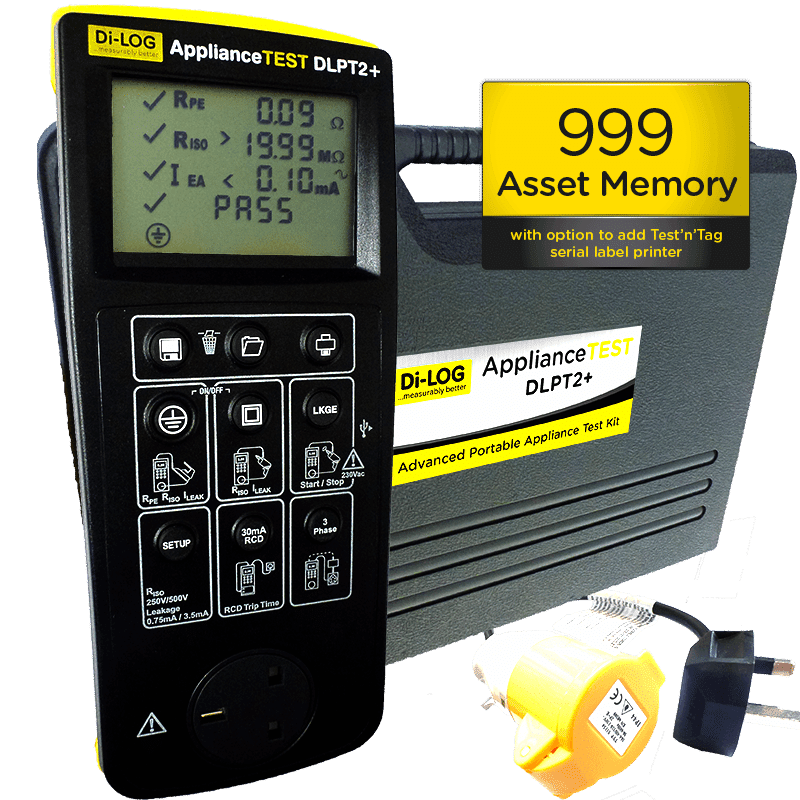
It is a primary device, an automated safety test instrument. Modern testers come in a variety of models, from the basic ones that perform earth continuity, insulation resistance and lead polarity testing, to more advanced units that offer additional tests like load/run currents earth leakage and touch currents. It is essential that testers are able to carry out leakage tests, or soft tests on sensitive equipment with electronic components like printers and computers. This can protect against damage caused by the high voltages used in standard tests of insulation resistance. The tester you choose must be based on the level of complexity of the appliance that are being examined.
2. Calibrations are required annually by UKAS-accredited laboratories in Cannock
This is a mandatory requirement to ensure compliance and due diligence. The UK Accreditation Service's (UKAS) lab must test the PAT tester at regular intervals. The calibration process is typically done annually. The calibration assures that the measurements of the instrument are accurate and traceable back to the standards of the nation. Each tester must be equipped with an authentic certification of calibration. Instruments that are not calibrated or calibrated render all test results invalid and do not provide any defense in the case that an accident occurs.
3. Daily/Pre-Use Functionality Checks
Before commencing any tests, the technician will need to conduct a routine functionality test. This is usually called "user check" as well as "verification test". This usually involves testing an already-tested "proof load", or set of test leads. If the tester produces results that are not expected to be expected for this "known-good" product, it could be an issue with the tester. The tester shouldn't use until it has received the service and calibrated. This simple procedure is essential to ensure that the device is working correctly the day you make use of it.
4. The critical role of the visual Inspection Equipment in Cannock
Though often ignored, tools that allow for an extensive visual inspection are as vital as electronic testers. This includes tools to dismantle appliances as well as plugs (screwdrivers) as well as an inventory of the appropriate fuse ratings to replace labels, a label maker or labels that are pre-printed to identify assets, and a flashlight for inspecting areas that are dark. This is where the majority of problems are identified. By skimping on this step it can ruin your entire testing program.
5. Test Leads, Adapters, and Specialised Test Leads in Cannock
A skilled technician should have an extensive set of test leads and adaptors to interface with every type of appliance inlet. There are adaptors for connecting detachable leads and test them, as well as adaptors that let you test the plug end. A failure to connect properly can result in a flawed test being run or even aborting the test completely.
6. Earth Bond Test Lead and its significance for Class I Equipment
Tests for Earth Bond are essential for Class I appliances that need an earth circuit for security. Test leads for Class I appliances (those which require an earth) must have high current capacities (5-25A typically) to confirm that the connection is secure. If the lead is of low quality or does not meet the requirements of the test current, a failed test can be given. This poses the risk of a security issue that could result in a fatal accident. Technicians must be aware of the importance of choosing the correct lead to test.
7. Insulation Resistance Tests and Voltage Parameters
Insulation resistance testing is a method of determining the quality of insulation by using insulation integrity using a DC high voltage (typically approximately 500V). The technician should be aware of when and how to conduct this test (e.g. for sensitive electronic devices or equipment that has surge protection). The test equipment must be able to provide the test voltage in accordance with the IET Code.
8. The instrument's settings and Pass/Fail Criterion in Cannock
Test equipment that is reliable has built-in pass/fail guidelines based on the IET Codes of Practice. For instance Earth bond resistance must be 0.1O+R and the resistance to insulation must be >1MO. Transparency means that the technician has to be aware of the limits set by the manufacturer, and not change them arbitrarily to achieve an acceptable pass. The service provider should be in a position to verify that their equipment has been configured according to the industry standard thresholds. It will help ensure results are consistent and justified.
9. Data management and reporting capabilities in Cannock
Modern PAT testers are data-loggers. They can save hundreds or even thousands of test results. These can be then downloaded to software to generate certificates, asset registers, and failure reports. Transparent companies use this feature to provide clear and precise documentation of the work done. Paper recording on paper, which is an alternative method, is susceptible to losses, mistakes, and the possibility of falsification. It does not meet industry standards.
10. Secondary Verification Equipment Voltage Indicators, GS38 in Cannock
Although the PAT tester serves as the primary tool, a competent technician also has a separate voltage indicator or voltstick that can prove dead before handling any electrical connections, notably in the case of replacing a plug, or determining the cause of a problem. This second device must be compliant with the HSE Guidance Note, GS38 that outlines safety requirements for design (e.g., finger guards or insulated probes, appropriate current fusing). This adds an important layer of safety for the person who is who is conducting the testing. Follow the best Cannock electrical equipment testing for more advice.
Top 10 Tips For Certification And Qualifications For Fire Extinguisher Service in Cannock
The world of fire extinguisher servicing in the UK is governed by a strict framework created to ensure competence, safety and conformity. Unlike some professions with mandatory state licensing, the burden is on the "Responsible Person" (under the Regulatory Reform (Fire Safety) Order 2005) to select a competent service provider. So, understanding the distinctions between certification and qualification is not only a formality. It's a vital aspect of doing your due diligence. Because there are a myriad of different companies and providers available that include highly reputable companies and individual operators It is crucial to distinguish between qualifications. A lack of credentials for a technician can make an insurance policy invalid, not meet legal requirements and, most importantly, leave the building and the occupants exposed. This guide highlights the ten most critical aspects of certificates to ensure that you select a qualified company for fire safety.
1. The Gold Standard: UKAS Accredited Third-Party certification (BAFE Sp101)
It is crucial to determine if a company has registered with the BAFESP101 scheme. BAFE (British Approvals for Fire Equipment) is a registered body that is independent. SP101 is the sole scheme designed to allow portable extinguishers. It is important to note that this scheme has been recognized and approved by UKAS. This means that the program is rigorously evaluated in comparison to international standards. Accredited by UKAS, the BAFE SP101 certificate is the highest proof of a company's competency. It proves that the technicians of the company are regularly checked, as well as its practices in the workplace, equipment and quality management system.
2. FIRAS Certification is an alternative Benchmark
FIRAS – Fire Industry Association Recognition and Accreditation Scheme is a second UKAS accredit certification scheme that's managed by the Fire Industry Association. It is a direct alternative to BAFE SP101 in terms of quality and credibility. FIRAS Certification gives the same degree of confidence that a firm has been independently evaluated by an audit and determined to be in compliance with the relevant standards including BS5306-3. To a person of responsibility, a company with either a BAFE SP101 certification or a FIRAS certification is an indication of a business that is competent and compliant. It is important to note that the UKAS certification for the scheme is essential.
3. The Foundation: Compliant with BS The Foundation: Compliance with BS in Cannock
It is crucial to show that you are in compliance with British Standard BS 5306-3 :2017 for the purpose of qualifying or certify. This code of practice is the only definitive guidelines for the servicing of fire extinguishers. Its requirements must be fully comprehended by those who are proficient. They dictate guidelines for the monthly inspections as well as annual basic service, as well as five-year extended service for extinguishers made of water, foam or powder. They also provide 10 year overhauls for CO2 units. There are certifications like BAFE and FIRAS which audit and confirm the compliance. When evaluating a company and asking them to assure that their work is up to this standard.
4. Individual Technician Competence A: The FIA Units of Competence
The individual technicians are accountable for their job, despite the certification of the company. The FIA Units of Competence are the most recognized individual qualifications. They are nationally recognized courses that are assessed by National Occupational Standards. The main elements include:
FIA Unit 011 Maintenance of portable fire extinguishers
FIA unit 010: Inspection of Portable Fire Extinguishers.
A skilled technician must hold at a minimum FIA Unit 011. Technicians who offer extended services (e.g. discharges for five years) must also be certified by Unit 010. Request information from potential providers regarding their technicians' specific qualifications.
5. The Role of Trade Associations (FIA & BAFE) in Cannock
Certification is not a result of being a member of an organization for trade such as the FIA. A company can be a member, but it is not required to follow their technical scheme. Membership signifies a commitment to the profession and allows access to guidance on the best practices. However it is not a guarantee of competence. Always search for the particular technical scheme certification (e.g., BAFE SP101) instead of relying on generic logos for membership.
6. Insurance: Public Liability and Professional Indemnity in Cannock
A good insurance policy is a mandatory requirement for any reliable servicing business. Public Liability Insurance must be in place (e.g. at minimum PS5m) to cover the property damage that happens during their work. Professional Indemnity Insurance will also be able to cover any errors that occur during the work they perform or in the advice provided. A certified company will have these insurances as a requirement of their certification, but it is recommended to ask for proof of insurance prior to engaging their services.
7. Manufacturer-Specific Training
Although the principles of BS 5306-3 are universal, each extinguisher manufacturer has its own specifications, valve mechanisms and charging methods. A highly qualified technician will often undergo manufacturer-specific training. This is especially important for more uncommon or complicated extinguishers including cleaner or wet chemical systems. This additional training enables technicians to complete the entire service on your premises safely and correctly without voiding warranties.
8. The process of auditing How do you maintain certification in Cannock
Knowing that certification is not a single award is crucial. BAFE as well as FIRAS certified businesses undergo annual surveillance audits by certified auditors. These audits occur without notice and consist of conducting interviews with technical staff and monitoring the work performed on-site. These certificates are given significance by the ongoing external examination. They guarantee that the quality is maintained, and not just a one-off examination.
9. The "Competent Person " vs. the "Skilled Person'
There is a significant legal distinction. According to the Fire Safety Order (FSO), only "competent individuals" are permitted to operate equipment. According to case law it is a person who has the appropriate training, knowledge, experience and other qualifications to implement the necessary measures. A skilled person (or skilled tradesperson) is one who has the physical ability to complete a specific task. A trained fire extinguisher technician needs to have both the physical capabilities required to complete the task, as well being able to understand the rules, standards and risks associated with the task.
10. Due Diligence – Verifying Certificates or Claims and Other Documents
The responsibility to verify qualifications is the responsibility of the responsible person. The logo on a website or van isn't enough.
Verify Online. Both BAFE (the British Association for Food and Environmental Engineering) and the FIA (the Federation of Italian assurances) have online directories you can search by company name to confirm the status of their certification. in Cannock
Request Certificates: A legitimate company is pleased to supply copies of their BAFE SP101 and FIRAS certificates as well as insurance documentation, as well as proof of their technicians' FIA qualifications. in Cannock
Check Expiry Dates: Be sure that all insurance policies and certifications are current and in-date. in Cannock
This verification is your best defence against an unqualified service provider. It's also a crucial part of your due diligence. View the recommended fire extinguisher checks in Cannock for site examples.
